Author: Nicholas De Leur

Why are all companies going digital? Are traditional marketing methods dead?

Why are all companies trying to employ digital techniques? The answer is quite simple actually, digital marketers think that social media outlets such as Facebook, Instagram and Twitter are the way to market for all businesses due to the apparent high reach and great connection they can make with consumers. However, this is misleading. Mark Ritson a Professor at Melbourne Business School explained at Mumbrella360, that eight of the largest consumer brands in Australia cannot even get their customers to connect with them on these social media outlets.

https://www.bluecorona.com/blog/execute-digital-marketing-strategy-2017

Woolworths currently sits second within the largest group of consumer brands. Statistics highlight that of the existing 14 million customers that only 6% of consumers have ever interacted with the brand on Facebook by liking or commenting on a post. Whilst this statistic is alarming, Instagram and twitter are receiving even lower interaction falling below 1%. 

As of March 19 2019, Woolworths have identified an issue concerning the engagement between the brand and its customers. Woolworths plans to launch a stand-alone media business with the intention of connecting its supplier partners directly with the customer, dubbed Cartology. This new division within the brand targets new and existing customers and aims to commercialise its media operations by giving the suppliers the ability to better engage with shoppers on a media platform. Cartology will focus on delivering more timely offers and content to its consumers. Woolworths CEO Brad Banducci states “Cartology has been established to provide a more streamlined approach for suppliers to better communicate to customers via our in-store, digital and other media assets,”

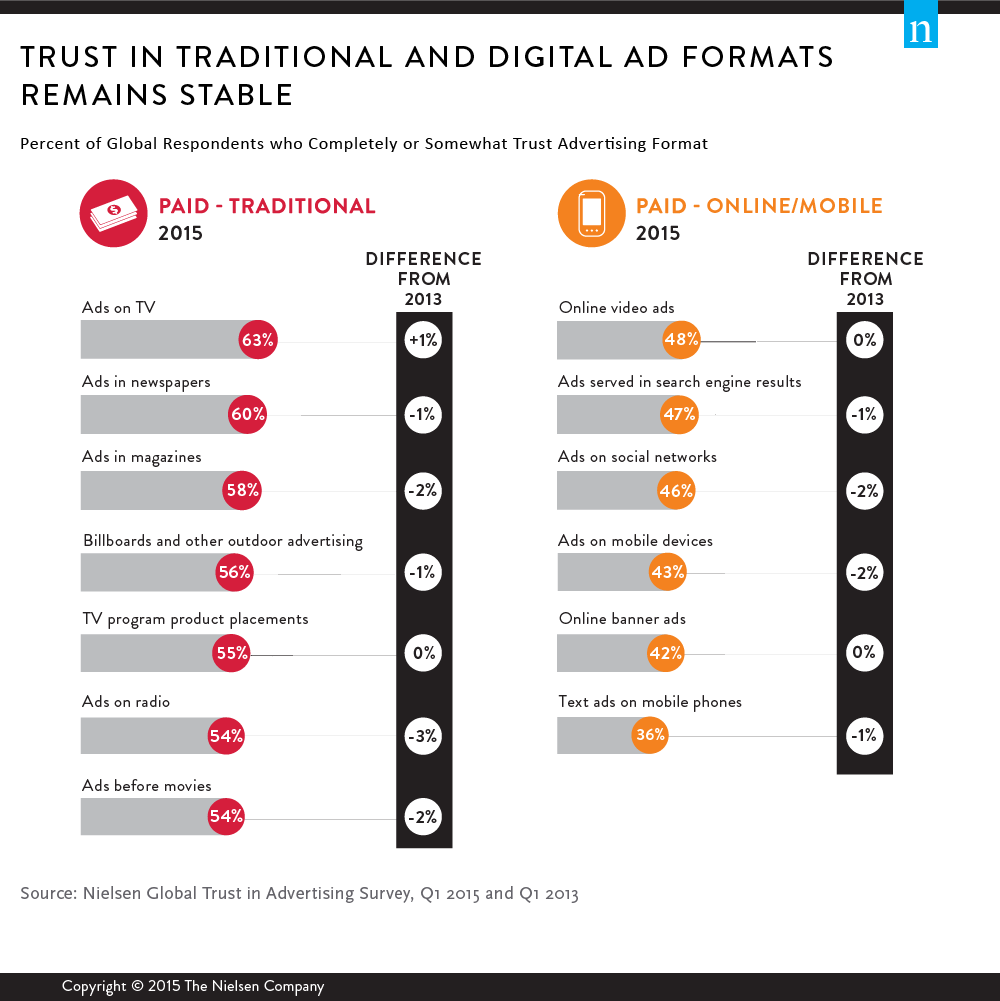
Whilst Woolworths has taken this initiative, other businesses should review their past strategy similar to Woolworths, and identify what their approach and goals are before they decide on how to tactic to use to interact with customers. Companies should consider the use of traditional media strategies as these pose numerous benefits. Statistics conducted by Nielson, indicate that traditional media, Television and Radio are more trusted by consumers than digital media outlets. Television is still the most used vehicle to watch any type of video in the world so why wouldn’t companies use it. These traditional media outlets are still viable and provide great options for businesses to interact with customers. Businesses need to consider both digital and traditional marketing methods to select the best alternative for their business to reach and interact with their existing and potential clientele.
https://www.nielsen.com/us/en/insights/news/2015/digital-formats-are-among-the-most-trusted-advertising-sources-despite-slow-growth.html

How Uber provides value and efficiency to its users?

Over 3.8 million people have used Uber in Australia, it’s become essential for people of all ages due to its convenience and reasonable pricing. I am frequently booking Uber’s after having a drink or when I am unable access to my car. Today were going to discover how the 4L’s of mobile social media provide value and efficiency to its users.

Uber has been successfully integrated into consumers lives, as the application centres around the common feature of ‘solving a problem’. Whilst this application is not entertaining it helps consumers who are time and location sensitive.

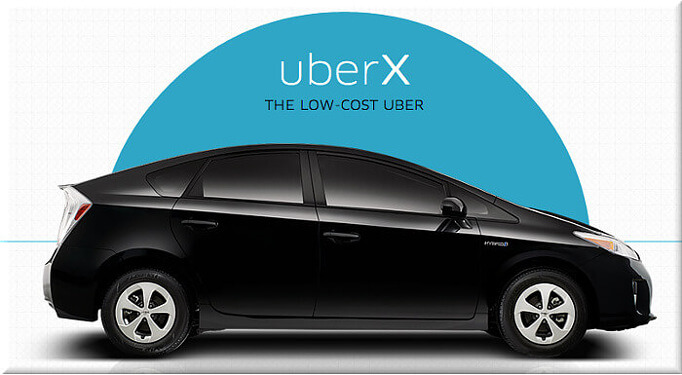
The Uber application is also individualised based on the specific location of users. When accessing the application, it displays vehicles in the close proximity of the user’s location. The application also allows users to select their preference of vehicle, ranging from UberX which is the standard service that seats up to 4 passengers, to Uber Black which provides luxurious and high-end vehicles for customers comfort. Uber also gives users the option to reserve a vehicle that caters for up to six passengers to travel in. This is called an UberXL and is used to accommodate larger groups. The most economical option that allows for 1 to 2 passengers only per booking, is UberPool. Consumers share the vehicle with other passengers heading in the same general direction hence sharing the cost. The preferences of rides can also depend on the state in which you live, as some ride options are only available in certain states of Australia.

http://uberestimate.com/what-is-uberx

Uber tries to engage with users by allowing them to leave reviews and rate the trip on its completion. The application asks the consumer to rate the experience out of a possible 5 star rating. Depending on the experience itself, consumers can leave positive or negatives comments from a list of common issues or compliments. However, if consumers want to discuss a concern further, they can converse with an Uber staff member through their mobile line and app service. This service also provides support for consumers having difficulty surrounding account setup, fare adjustments or any other issues.

Uber has encouraged the creation of user generated content through starting their own YouTube series called, “#UBERSTORIES”. The stories outline how Uber or an Uber experience impacted their lives. The hashtag ‘’#UBERSTORIES’’ then followed to twitter, endorsing consumers to share their previous Uber experiences.

Now tell me in the comments below what’s your #UBERSTORIES?

How Old El Paso created a viral and successful marketing campaign?

‘Porque no los dos.’

Now you can’t tell me you didn’t immediately think of that little girl getting thrown in the air raving about soft- and hard-shell tacos. But why do we remember this ad? I’ll tell you why this advertisement has become such a hit through Jennifer Lonoff Schiff’s 7 steps to creating a successful integrated marketing campaign.

The Old El Paso advertisement first aired in 2007 becoming a viral sensation whilst becoming a common trigger in households influencing the purchase behaviour of tacos.

Through, Schiff’s’ model we can analyse how it has happened, first through Old El Paso clearly identifying their target audience and, finding the needs and wants of the consumer then serving that to them. This was successfully achieved through appealing to both children and adults, this is essentially catering to the average Australian family who can’t decide what they want for dinner. Although the advertisement is centred around deciding between soft- and hard-shell tacos, Old El Paso was not only able to fulfil this want of having both options, it also instilled in the consumers mind that the key to a happy dinner is their product. 

Using the second step in Schiff’s model Old El Paso needed to ‘Pick their Channels’. They knew their audience was families, so they needed to decide which channels would be appropriate to broadcast their marketing message. As the advertisement was produced in 2007, Old El Paso decided to use television as their marketing channel as this was the most used media platform for consumers of this time period. The commercial aired typically between 4pm and 7pm just prior to dinner, in an attempt to encourage purchase behaviour.

The third step within the process is ensuring that your brand maintains a consistent visual identity. Old El Paso continued with ‘Porque no los do’ advertisement for a decade following, due to brand awareness gained from the iconic quote constantly being aired.

Next, Old El Paso needed to utilise the fourth step in the process which is to create a clear message which could be adapted or repurposed to suit other media outlets. Due to the era, social media wasn’t as dominant in the marketing of products, so instead Old El Paso decided to cut the advertisement from its original 30 seconds down to 15 seconds. This not only allowed for cost reductions it also meant the advertisement was more direct as it got to the point faster.

For this advertisement to be successful it must be integrated and encourage the consumers purchase behaviour of Old El Paso products, specifically the hard and soft taco dinner kit and accompanying sauces.

Schiff then recommends that for a brand to be successful within advertising, marketing teams must work collaboratively to produce the advertisement. Although it is difficult to gauge whether or not Old El Paso is fulfilling this step, due to its success we can assume they are doing so.Financial reports have shown an increase in the brands sales, going up in revenue by 6% in the first year after the advertisement’s release, whilst continuing to grow for some years after.

Cookies: Good or Bad?

Cookies, no not the ones that you dip in milk, the ones that your computer stores every time you visit a site. Essentially, they are just are files which are stored on your computer or mobile upon you visiting a site. These are then placed in a file located within your web browser. Companies claim that these cookies are used to make your online experience easier by saving browsing information, remembering your site preferences and giving you locally relevant content.

However, is this actually making your life easier or merely invading your privacy?

First it’s important to consider that cookies come in two different forms and perform different roles. The two different types of cookies, are session cookies and persistent cookies. Session cookies allow the website to track your activity whilst you proceed to other pages on the site, remembering prior decisions made by consumers. For instance, when online shopping the website remembers that you have placed items in your cart whilst allowing you to continue browsing. However, all information obtained by the website will be removed after the consumer exits and thus nothing is stored. Persistent cookies assist websites in the future by storing your previous information and settings. There are numerous uses of persistent cookies including authentication login process, your preferred language selection and menu benefits, just to name a few. Facebook uses persistent cookies to enhance customer experience by allowing a quick authentication login process and shows user preferences. Facebook shows posts within your feed which you have indicated to have similar interest in previously. This means that persistent cookies are stored to try enhance the customers experience next time by analysing the consumers behaviour previously on that website.  

Whilst these cookies can be helpful in some cases, they are also storing and tracking your every move which can pose a great risk. Most websites collect information for legitimate reasons however some websites may sell the information gathered or use it hack into online accounts or social media outlets. Your personal information being sold to third parties, although may seem harmless, has actually meant that all the information you’ve allowed these sites to gather, is then sent on to other random websites that you may not even know exist. Essentially your cookies have been trafficked through the web and you are no longer in control of your own information.

Should consumers be constantly wary of cookies? Should you be managing and deleting your cookies on a regular basis to stop the possibility of privacy been breached?

How can small companies compete within the market?

The internet is an accessible and informative tool available to consumers at all times. These consumers are constantly using their phones to search and seek answers about every little thing whether that be how to cook an apple pie or how far Mars is away from earth. Arguably the most powerful search engine, Google, uses algorithms to weigh varied elements to determine which website is most appropriate to the consumers search query.  Some of these elements that impact which website comes first on the search engine include frequency of keywords on these websites, quality and relevance of the data as well as HTML title tags.

There are two search engine marketing techniques which are used by businesses to ensure  they are the top results to come from relevant search queries. Search engine optimisation is the ‘’structured approach used to increase the position of the company or its products in search engine results by natural or organic processes”. In contrast, paid search marketing gives companies the opportunity to appear first within the search engine as a paid sponsor. Whereas companies can also use Pay per click which displays your contextual advertisement on a third-party site. If a customer clicks on your advertisement they are immediately redirected to your site and you pay for service of receiving a potential customer.

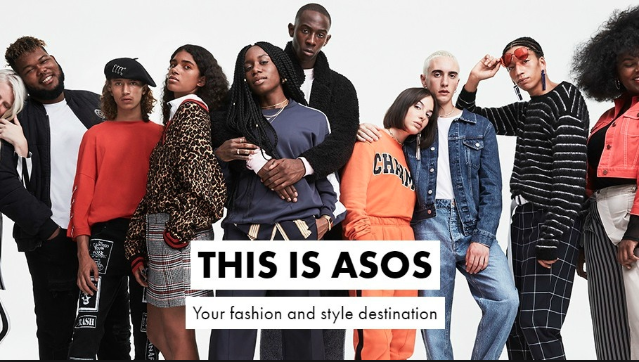
Well, now the burning question is how can small businesses compete? How can small clothing businesses compete with major online outlets like ASOS and Boohoo? In simple terms…they can’t! ASOS and Boohoo are spending millions of dollars in paid search marketing to be up first in the search engine results when searching keyword queries. ASOS and Boohoo are usually at the top of the first page on the major search engine results for a large majority of keyword inquiries, regarding men’s clothing and most consumers are too lazy to even scroll down half a page. They’re listed either in sponsorship marketing or in the search engine optimisation for ‘men’s clothing’, ‘cheap men’s clothing’ and ‘fashionable men’s clothing’. 

Most small companies are currently on the hunt for alternatives that will help them to compete within the market against these major companies. In the past they’ve used black hat techniques such as meta keyword stuffing, hidden content and link farming to try get the advantage on competitors. Meta keyword stuffing is the repetition of keywords within meta tags and visible content, this is used in attempt to gain an unfair rank advantage in search engines.

The question now is what are small companies going to do? Wait for their companies to gain organic exposure over time whilst also utilising and employing white hat techniques. Produce quality content with the appropriate use of titles and meta data or are these small companies going to push the boundaries and employ questionable techniques such as grey hat techniques.

WHY IDEA’S SPREAD?

In todays modern age we are constantly connected through social media, regardless of the platform they will be inundated with numerous advertisements. Whether it be to encourage purchasing behaviour or to support a foundation these ads are going to work you into believing what they’re selling. The question is, how are they going viral?

Let’s start by looking at something as simple as an Australian beer ad. Popular Australian brewery, Carlton Draught, is adopting a similar marketing scheme to that of American beer company, Budweiser. Through centring their advertisement around a specific event the viewer, after seeing it enough times, then associates that event with the beer company. This ideology was affirmed, with the advertisement illustrating four principles out of Jonah Berger’s six step model. Jonah Berger’s six step model is composed of social currency, triggers, emotions, the social proof, practical value and stories.

https://medium.com/@srikanthvadrevu/6-stepps-that-you-are-not-aware-of-social-transmission-8e8842ca21fc

The renowned ‘It’s a big ad’ advertisement demonstrates guys from ages 25-60 rallying together from two sides of dry land environment to form a person drinking a Carlton draft beer. This is highlighting a message through the story principle, that all men should drink Carlton draught because it’s a masculine beer and the Ad was ‘expensive to make’. I thought to myself, would this advertisement cause some guys to conform as result? Of course, generally males have a human tendency to want to fit in and be socially accepted, from watching this Ad it reinforces that you must drink beer if you’re a man. Carlton Draught effectively markets their product by displaying the Ad when a large proportion of the target niche would be viewing. This was on AFL commercial breaks, triggering purchase behaviour. Alcohol advertisements can trigger different emotions for various consumers. However through the simple message which the advertisement portrayed, it would have had high arousal on a large proportion of consumers, causing them share their opinion.